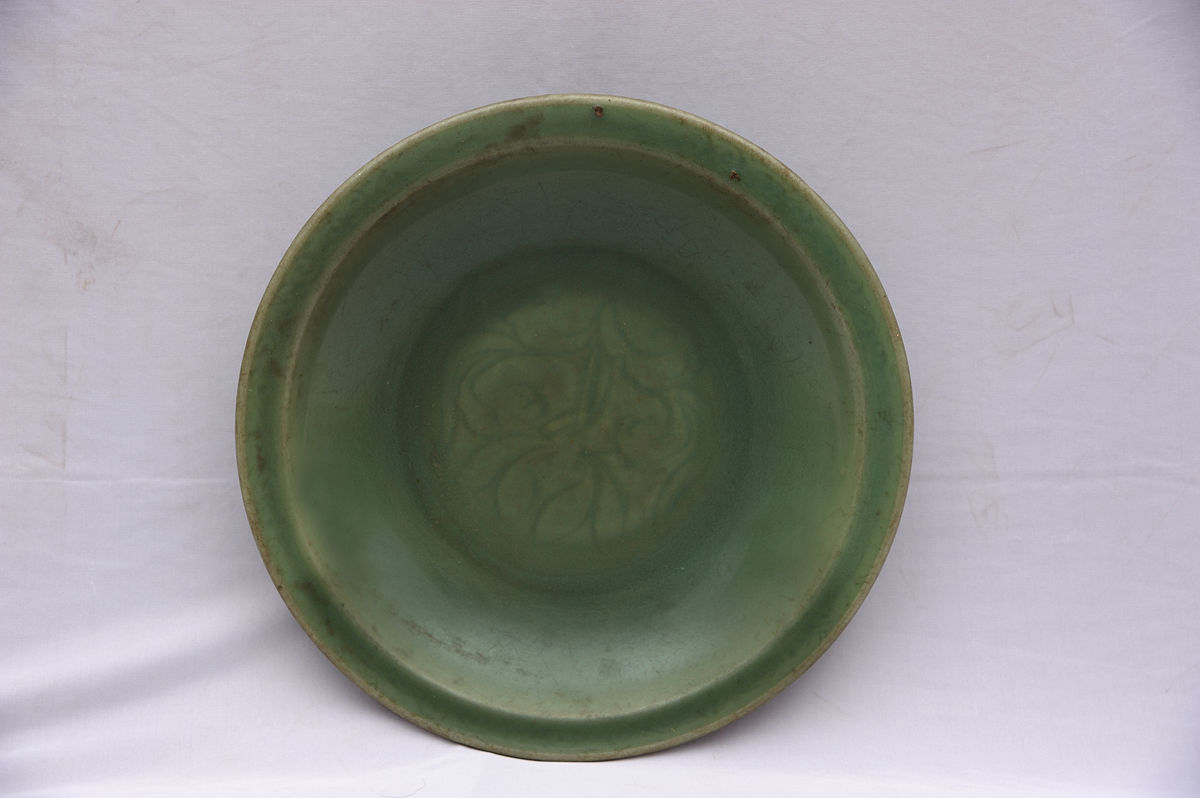
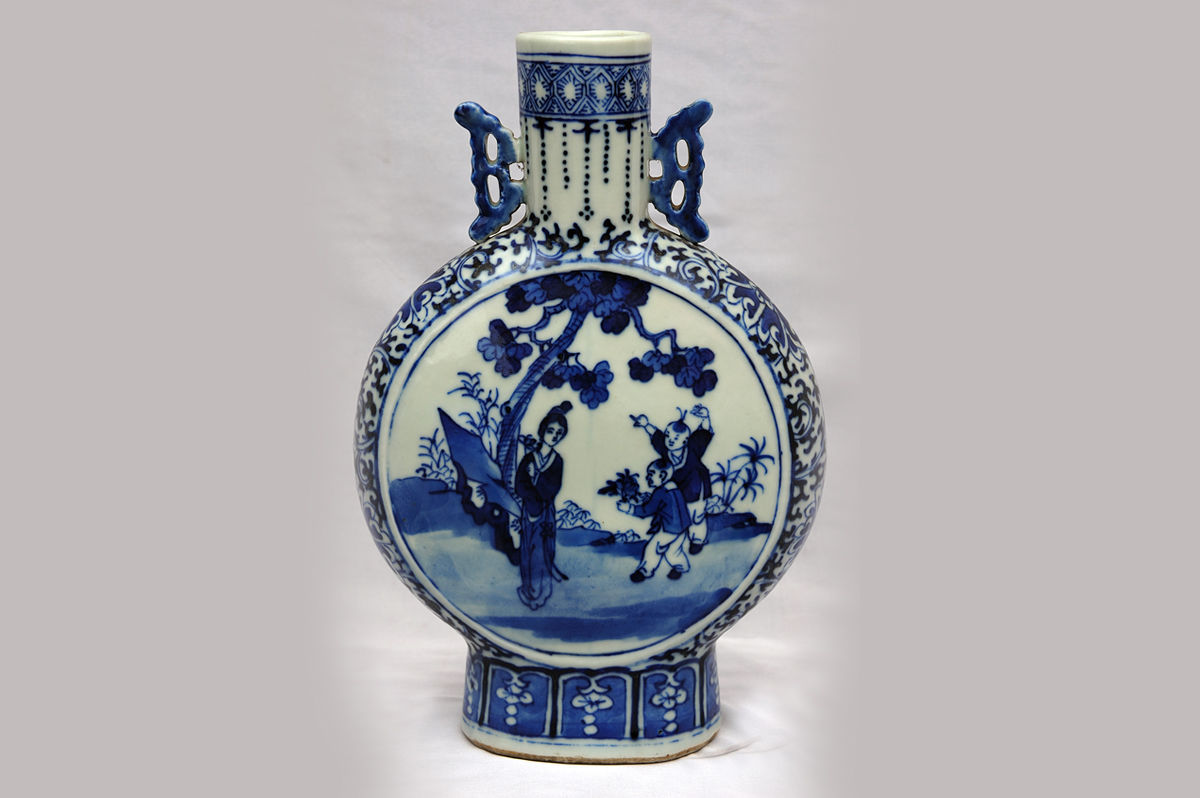
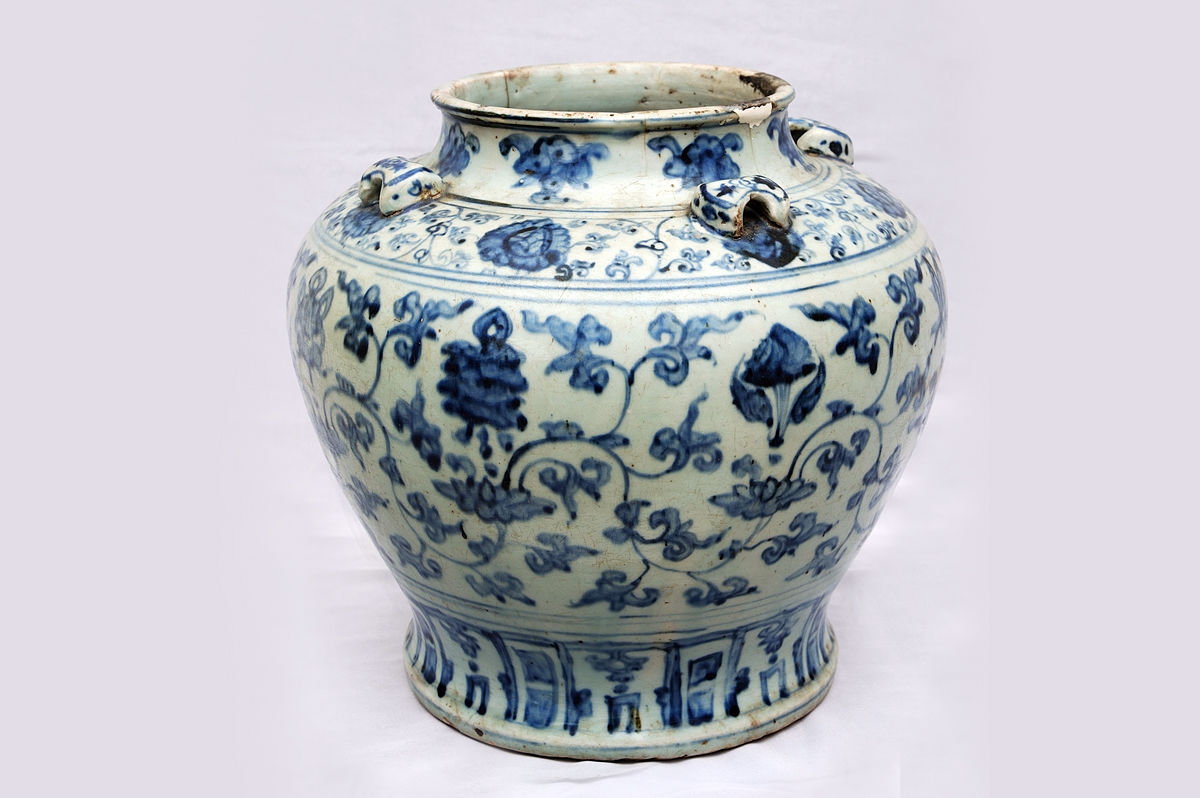
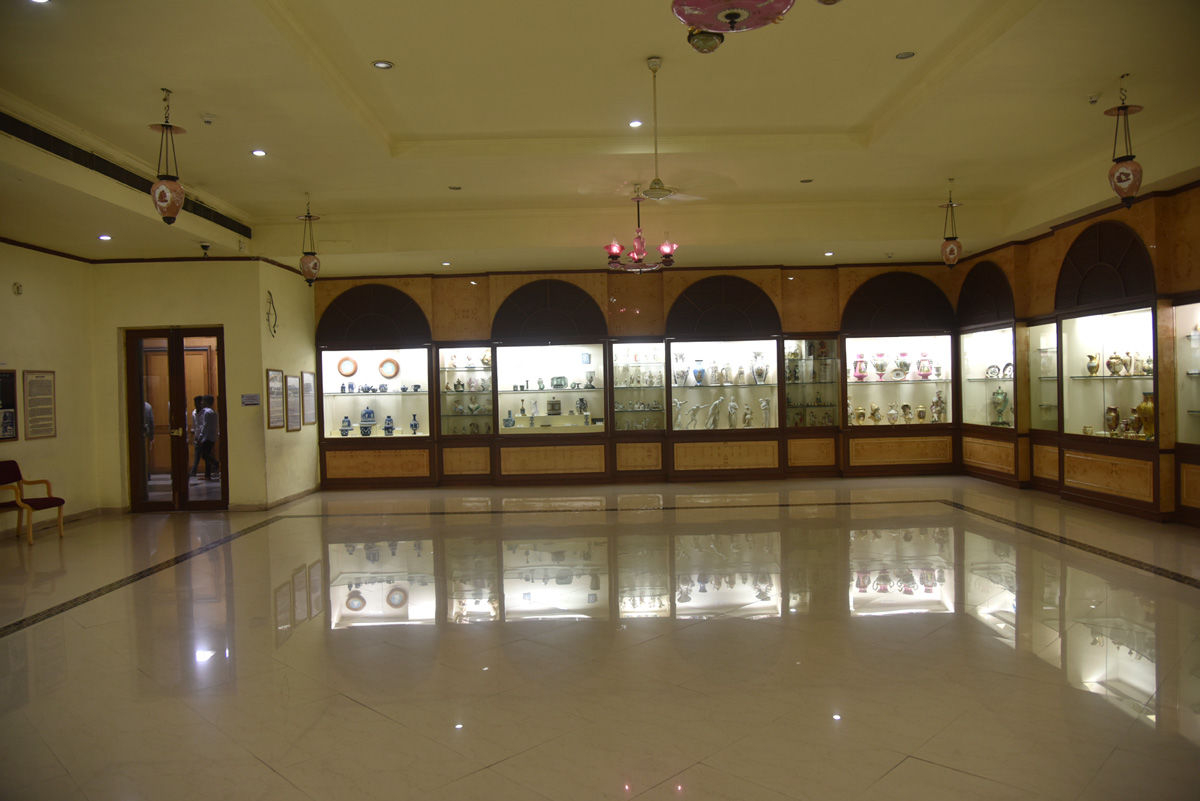
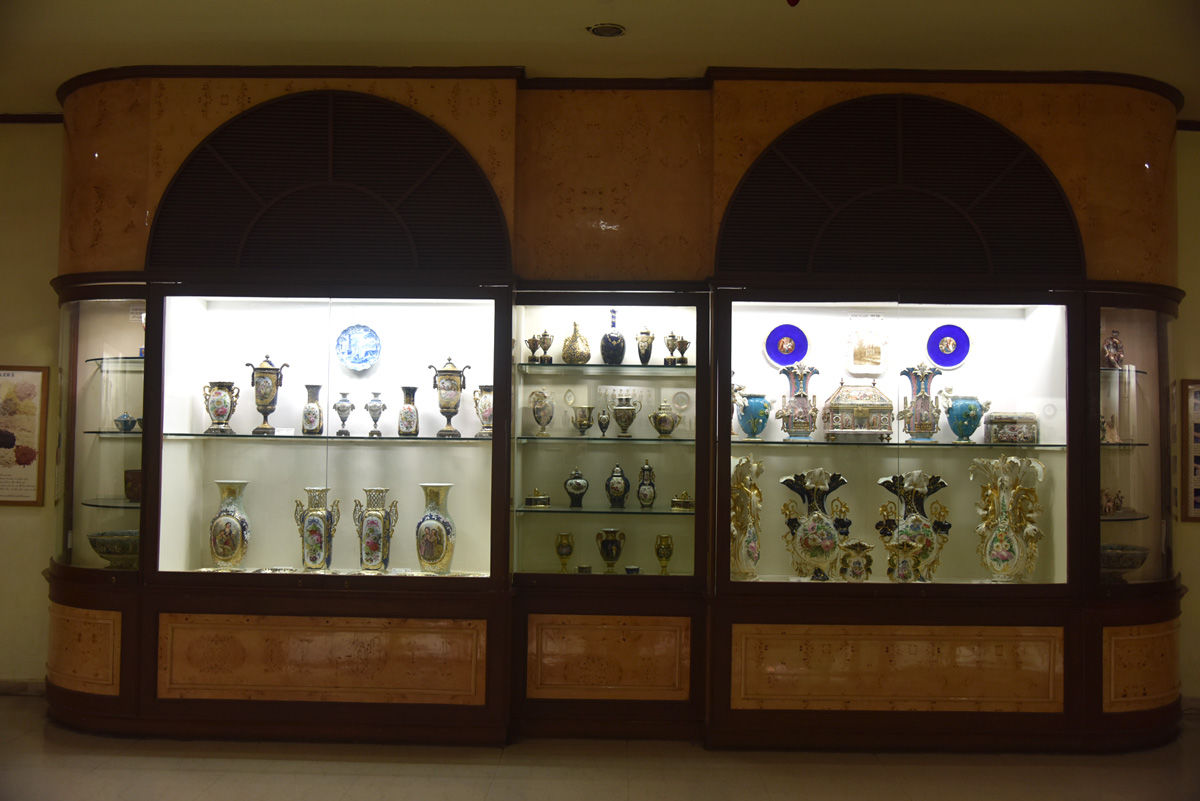
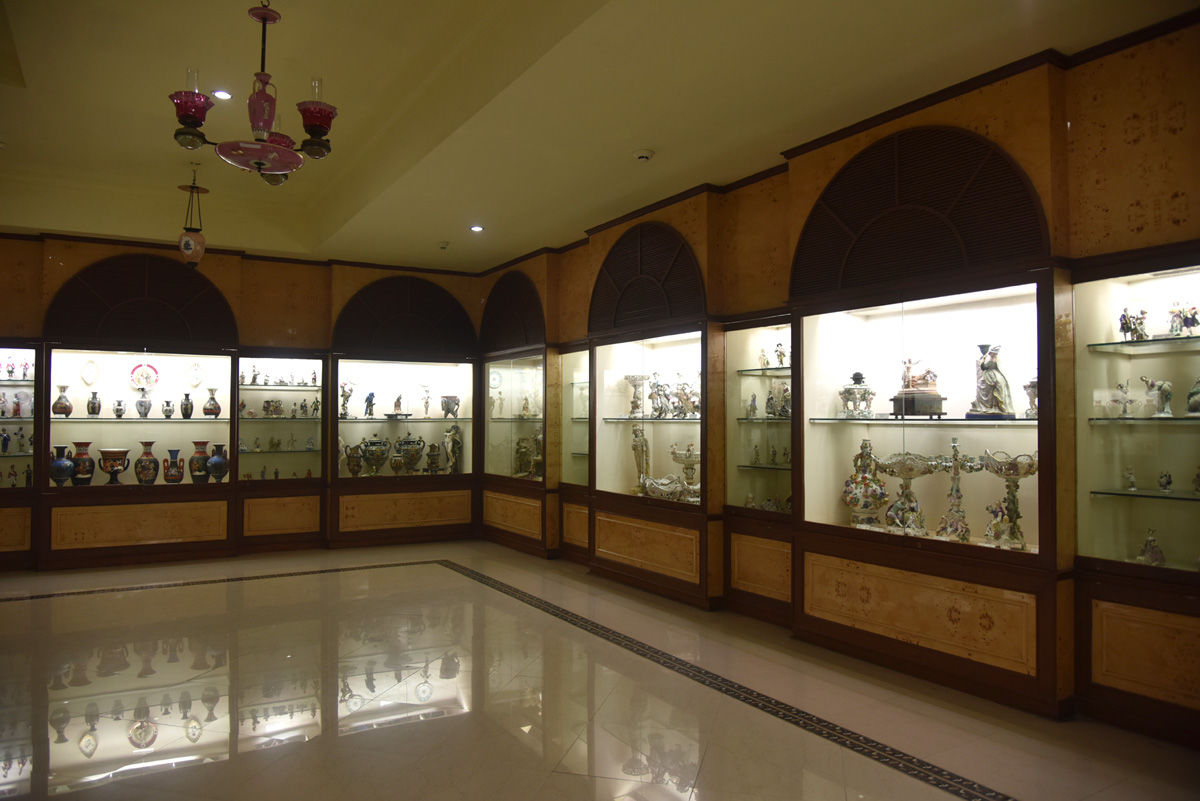
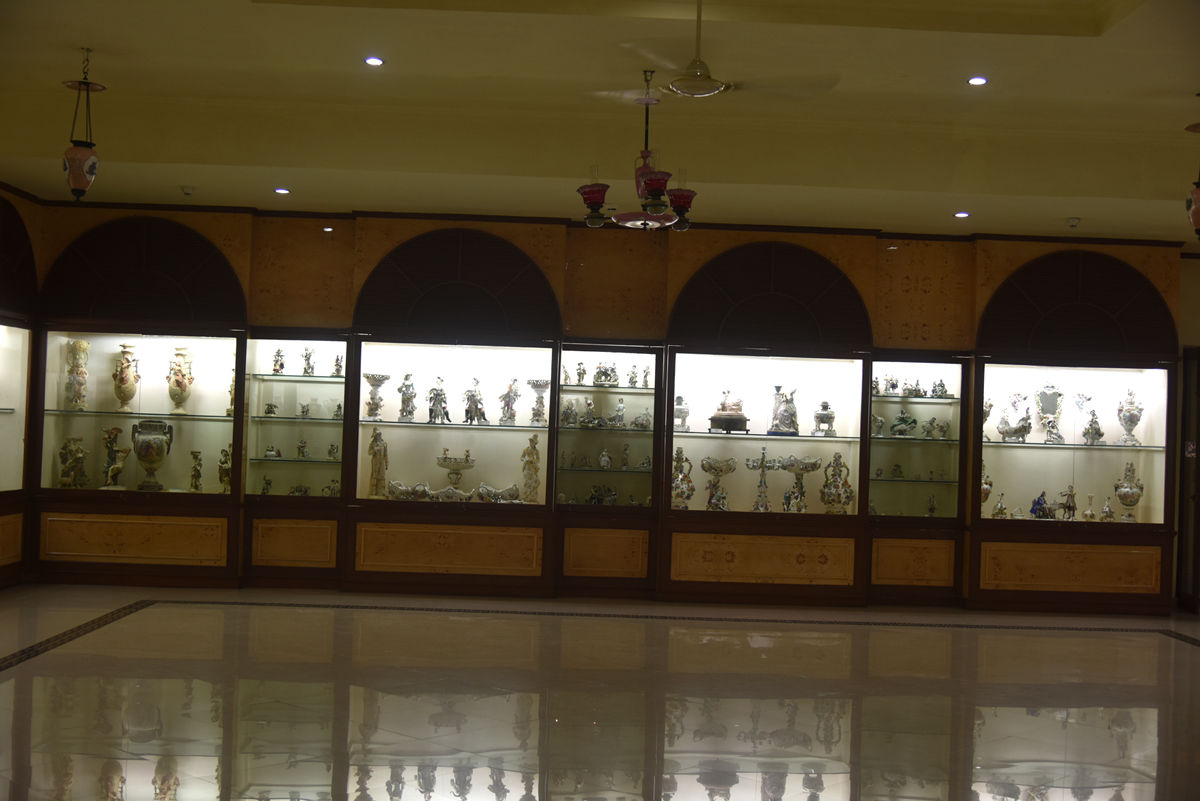
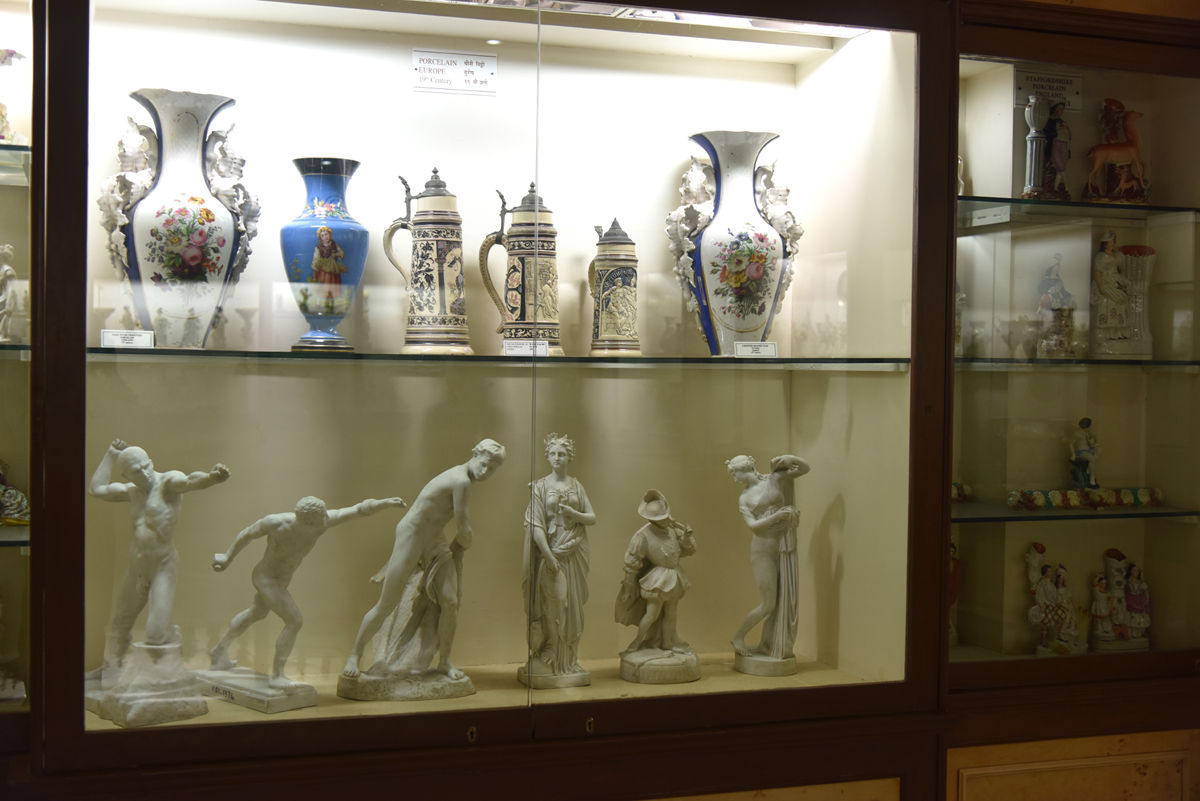
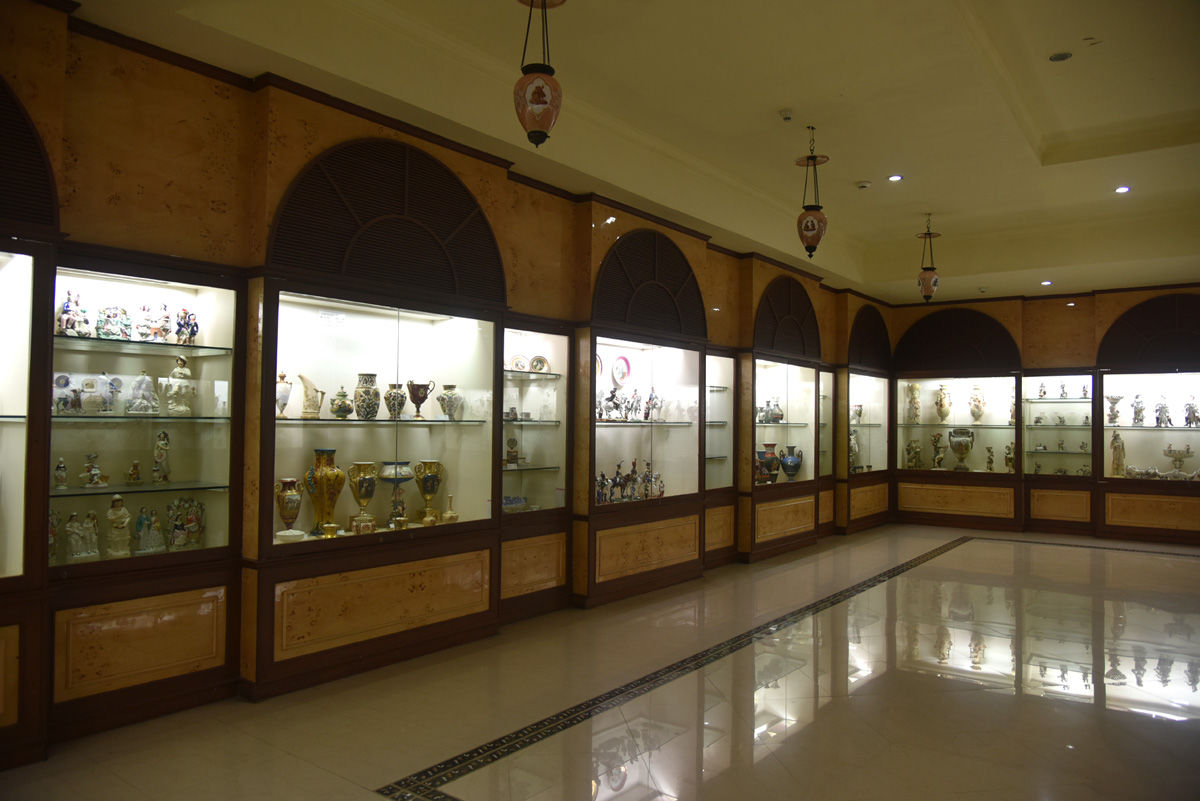
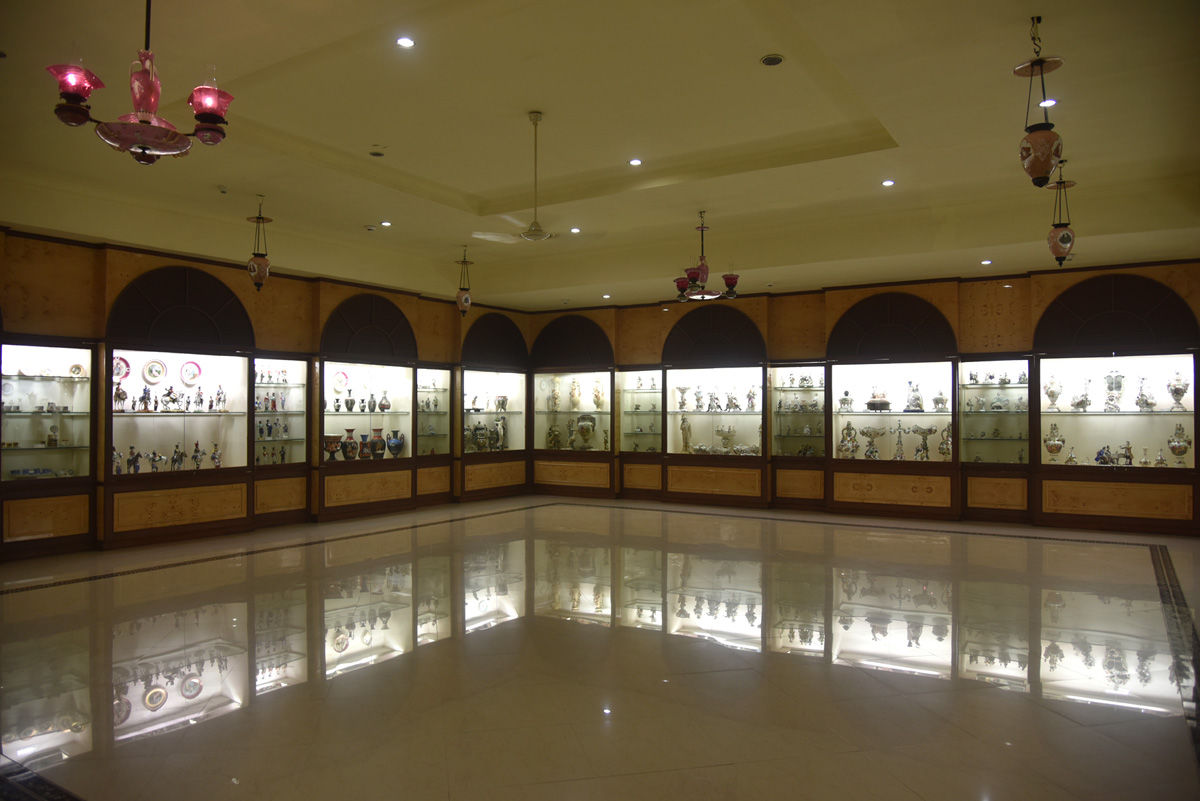
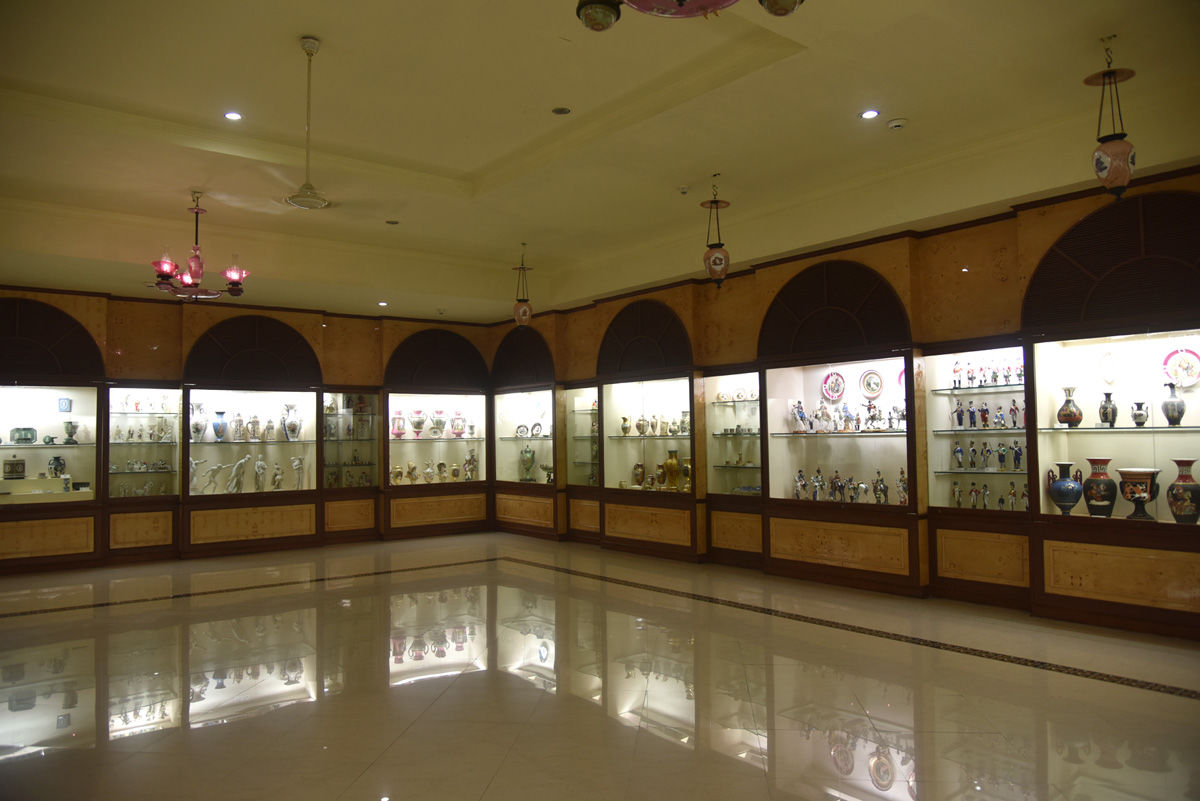
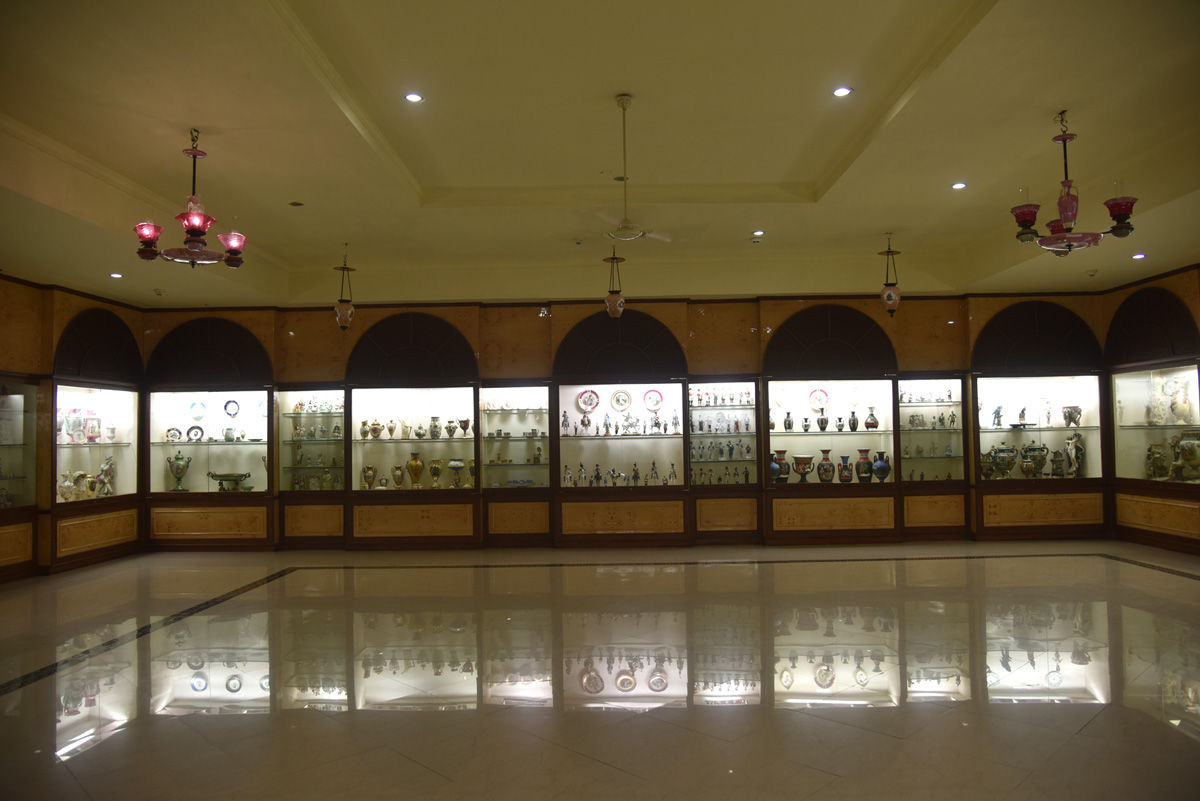
The porcelain collection of the museum comes from France, Germany, UK and Italy. The Serves porcelain collection of France and the Dresden porcelain collection of Germany constitutes a unique place in the museum’s collection. Porcelain can be broadly divided into two categories, namely Hard-paste porcelain and Soft-paste porcelain.
The Salar Jung Museum acquired a good collection of unprecedented pieces of the painted Serves porcelain unrivalled in workmanship and bears factory marks. Serves porcelain had its beginning and development under the liberal patronage of Louis X|V, XV, XV| and Napoleon, Madam De Pompadour, Marie Antoinette respectively displayed great interest in the production of beautiful painted porcelain pieces and many of them were presented to the contemporary Emperors and kings of Europe and Asia.
The museum has a considerable number of original Serves pieces which can be dated back to the reign of Louis XV, XVI and Napoleon I. They possess original Serves marks, the cross L with the letter inside. The pieces of Napoleonic period are marked with ‘M Imp. Le de Sevres’ dated back to 1804 to 1808. There are two Serves vases said to be presented by Louis XVI to Catherine II of Russia.
Dresden porcelain of the museum comes next to the Serves collection in prominence. The manufacture of porcelain was started at Meissen on the Elbe about 12 miles from Dresden by Augustus II, the king of Poland and elector of Saxony. During the first quarter of the 18th century, accidentally the main ingredient of the hard porcelain ‘Kaolin’ was found in Germany which resulted in the success of finding the process of making hard porcelain under liberal royal patronage.
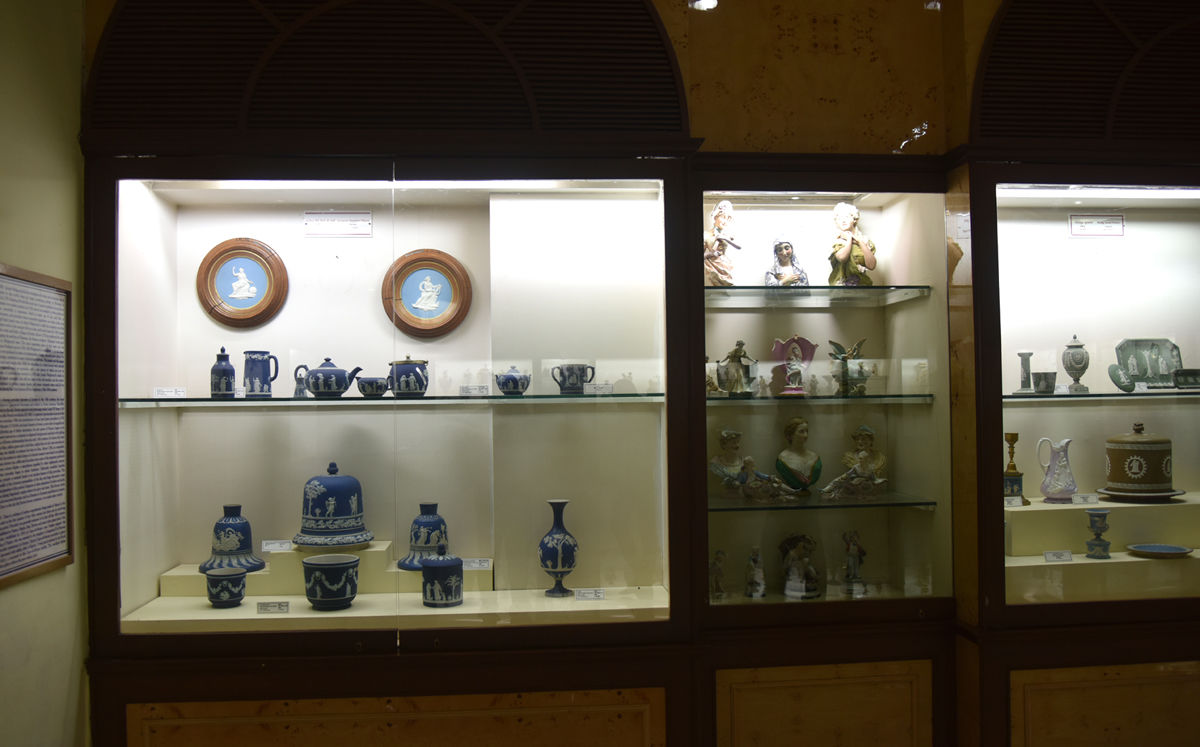
The Salar Jung museum possesses a good number of unprecedented Dresden porcelain pieces which were identified based on factory marks imprinted below each article. The English porcelain collection of the Museum is of assorted types mostly produced during the 19th century. The exceptional pieces are cups, saucers, plates, figurines etc. The collection includes the example of factories like Worcester, Chelsea, Derby, Wedgewood and Milton.
The Wedgwood porcelain collection of the museum is one of its kind. Josiah Wedgwood started the manufacture of Wedgewood pottery in 17th century at Burslem, Staffordshire, which eventually became one of the most famous potteries of the world. The Salar Jung Museum is proud to have a copy of the Portland vases made at the Wedgewood factory.